Merry Christmas Monster Truck: A Designer’s Review
As an embroidery designer who has spent years digitizing and testing files for small business clients, I approach every new machine embroidery design with a critical eye. It is not enough for a file to look cute on a screen; it must perform under the needle, withstand washing, and elevate the brand identity of the business using it. Today, I am reviewing the Merry Christmas Monster Truck, a festive yet rugged option for holiday merchandise. This review focuses on its viability for commercial use, from boutique patches to staff uniforms.
First Impressions: Bold, Playful, and Seasonal
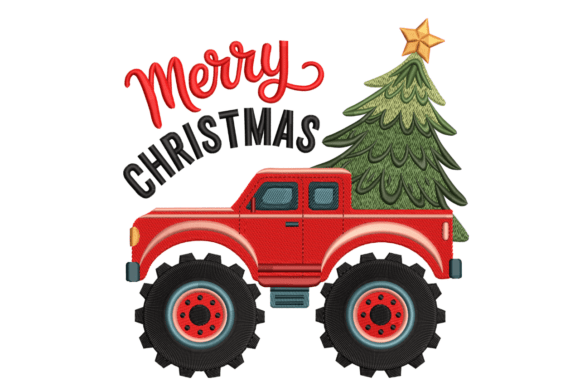
The first thing that strikes me about the Merry Christmas Monster Truck is its energetic personality. The description highlights a "rugged red pickup with giant, knobby monster truck tires," which immediately sets a tone that is both masculine and whimsical. In the world of holiday decor, we often see delicate snowflakes or traditional nativity scenes. This design breaks that mold by offering something action-packed and bold. For a brand looking to stand out, this visual contrast is invaluable.
The aesthetic feels playful but structured. It does not come across as childish in a way that limits its audience; rather, it taps into the popular "truck culture" that appeals to a wide demographic, including fathers, grandparents, and outdoor enthusiasts. When evaluating the thread colors implied by the description—specifically the rugged red and the likely greens of the "freshly c" (presumably Christmas tree) haul—the palette suggests high contrast. High contrast is essential for visibility, especially when the design is scaled down for smaller applications.
Real-World Applications for Small Business Merch
For small business owners, Etsy sellers, and apparel decorators, versatility is key. Here is how I envision this digital embroidery file performing in various commercial contexts:
- Embroidered Patches: This is perhaps the strongest use case. The bold lines of the monster truck tires and the truck body translate well to patch format. A patch allows the customer to apply the design to jackets, bags, or hats later, adding perceived value to the handmade product.
- Custom Apparel and Uniforms: Imagine a local auto shop, a hardware store, or a family-owned brewery releasing limited-edition holiday gear. Placing this design on the back of a work shirt or as a chest logo accent creates instant brand recognition. It signals that the business is fun, approachable, and community-focused.
- Cap Embroidery: Monster trucks and caps go hand in hand. However, cap embroidery requires careful handling due to the curved surface. If the design’s width fits within standard cap hoops, it can be a bestseller. The "knobby tires" provide texture that looks premium when stitched correctly.
- Tote Bag Design: For boutiques and bakeries, a canvas tote featuring this truck hauling a Christmas tree makes for an excellent reusable gift bag or retail item. The sturdy nature of canvas supports the heavier stitch count likely required for such a detailed vehicle.
- Apron Embroidery: Creative studios and cafes can use this on staff aprons during the holiday season. It serves as a conversation starter and enhances the festive atmosphere without sacrificing professionalism.
Technical Considerations and Stitch Density
While the visual appeal is strong, technical execution determines whether the finished product looks amateur or professional. As a designer, I have several concerns and recommendations regarding the technical aspects of this file.
First, consider the stitch density. Monster truck tires are typically depicted with deep treads. If the digitizer has used too many satin stitches or dense fill stitches in these small areas, the thread may bunch up, causing puckering on lighter fabrics. I strongly advise running a test stitch-out on a similar fabric to your final production material before committing to a large order. Check if the tire details remain distinct or if they merge into a solid blob of thread.
Second, evaluate the hoop size requirements. The description mentions a "pickup" and "giant tires," which implies a wider design. Ensure your embroidery machine can accommodate the necessary hoop size. If you are planning to use this on smaller items like baby onesies or pocket accents, verify if the design can be scaled down without losing legibility. Tiny lettering or intricate details often disappear when reduced below three inches.
Third, fabric texture matters. This design will perform best on stable, medium-to-heavy weight fabrics like denim, canvas, twill, or fleece. Avoid using it on thin, slippery synthetics unless you are an experienced operator using extensive stabilizing techniques. The weight of the truck design needs a solid foundation to prevent distortion.
Brand Identity and Customer Trust
Using a cohesive set of design assets is crucial for building brand identity. The Merry Christmas Monster Truck can serve as a cornerstone for a holiday campaign. When customers see consistent, high-quality embroidery on your packaging, uniforms, and merchandise, it builds trust. It signals that you care about quality and detail.
For handmade brands, this design adds a layer of professionalism. A simple printed logo can feel generic, but an embroidered patch or direct-to-garment embroidery feels tactile and premium. This tactile experience increases the perceived value of the item, allowing for higher price points. Furthermore, unique designs like this encourage social sharing. Customers are more likely to post a photo of their child wearing a cool monster truck hat than a plain beanie, providing organic marketing for your business.
Where to Use Caution
Not every application is suitable. Be cautious when placing this design on items that undergo frequent, harsh washing, such as gym bags or heavy-work uniforms, unless you use high-quality rayon or polyester threads and proper backing. The intricate details of the "knobby tires" may wear faster than broader fill areas if not densely stitched.
Also, avoid placing this on dark uniforms without checking the thread color contrast. If the design relies on light colors for highlights (like snow or headlights), ensure they pop against the dark fabric. If the digitization does not include underlay stitches for dark garments, the design may look flat or allow the fabric color to show through improperly.
Practical Designer Notes for Production
Before you launch this design into your commercial embroidery workflow, follow these steps:
- Test in Black and White: Print or stitch a monochrome version first. This helps you evaluate the clarity of the outlines and spacing without the distraction of color. If it looks good in black and white, it will look great in color.
- Check Commercial Licensing: Always confirm the license terms included with the embroidery file. Ensure you have the right to sell finished products featuring this design. Never assume; always read the terms.
- Create a Printable Mockup: Before stitching, create a digital mockup to show clients or visualize placement on different products. This saves time and thread during the approval phase.
- Use Proper Stabilizer: Given the likely weight of the design, use a cut-away stabilizer for stretchy fabrics and a tear-away for stable woven fabrics. Hooping technique is critical to prevent shifting.
- Inspect Spacing: Look closely at the gap between the truck bed and the tree it is hauling. Ensure there is enough space to prevent thread bridging, which can look messy and break easily.
In conclusion, the Merry Christmas Monster Truck is a promising asset for small businesses looking to add a rugged, festive touch to their holiday lineup. By paying attention to technical details like stitch density, fabric choice, and stabilizer selection, you can transform this digital file into a high-value physical product that enhances your brand identity and delights your customers.